
Book Athens Transfers to Varvakios Central Market
Book Athens Transfers to Varvakios Central Market
Varvakios Central Market is one of the best places to experience everyday Athens through food. Meat and fish halls, produce stalls, olives, cheeses, herbs, spices, and traditional shops fill the surrounding streets with movement and strong local character. Book Athens Transfers provides a comfortable journey from Athens Airport toward the historic centre.
Distance and Travel Time from Athens Airport to Varvakios Market
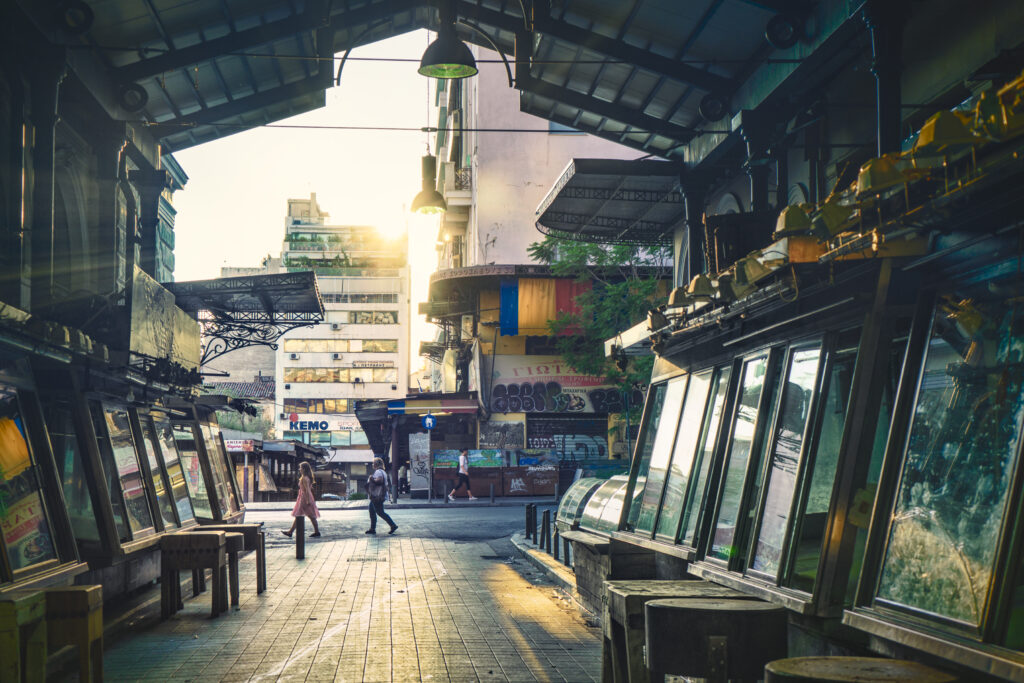
Varvakios Central Market is located on Athinas Street in the historic centre of Athens, between Omonia and Monastiraki.
The road distance from Athens International Airport is roughly 35 to 40 kilometers depending on the route.
Driving generally takes around 40 to 60 minutes, although central traffic can extend the journey.
Because the market sits inside a dense part of the city, the most practical approach for many visitors is to take a private tranfer to their hotel or another convenient central drop-off point and continue on foot.
Once in the historic centre, Varvakios is easy to combine with Athinas Street, Evripidou Street, Monastiraki, Psyrri, and Ermou.
The Food Heart of Central Athens
Varvakios is not a market designed only for visitors.
It remains a working part of the city’s food economy.
Butchers, fishmongers, traders, restaurant workers, local residents, and curious travelers all move through the same halls and surrounding streets.
The experience is direct and practical rather than polished.
Fresh fish lies on ice. Meat hangs behind counters. Vendors call out prices. Deliveries arrive. Shoppers compare ingredients and move quickly between stalls.
For visitors accustomed to supermarkets and carefully packaged food, the market can feel intense.
That intensity is exactly what makes it interesting.
Varvakios shows food before it reaches the restaurant table.
A Market with Deep Roots in Modern Athens
The central market developed during the nineteenth century as Athens expanded into the capital of the modern Greek state.
By the late 1800s, the market had become a permanent commercial institution in the city centre.
Its location on Athinas Street was ideal.
The street connected Omonia with Monastiraki and sat within a district filled with merchants, warehouses, small workshops, food businesses, and transport activity.
More than a century later, the surrounding streets still preserve much of this commercial character.
Modern hotels and new restaurants have appeared, but the district has not lost its role as a place where food and everyday trade remain central.
The Meat Hall
The meat section is one of the most visually powerful parts of Varvakios.
Different cuts of beef, pork, lamb, goat, and poultry are displayed openly behind the counters.
The environment can be confronting for visitors who are not accustomed to traditional butcher markets.
This is not necessarily the right place for everyone.
If the sight of raw meat is uncomfortable, the surrounding produce streets, cheese shops, spice stores, and delicatessens provide a less intense way to experience the market district.
For travelers interested in food culture, however, the meat hall demonstrates how strongly traditional market practices remain integrated into modern Athens.
The Fish Market
The fish market is equally important.
Greece’s geography makes seafood a natural part of the national cuisine, and the market displays a changing range of fish, squid, octopus, shellfish, and other products depending on the season and catch.
The atmosphere is particularly active earlier in the day.
Traders work quickly while customers inspect freshness and compare prices.
Even visitors who are not buying anything can learn a great deal simply by observing the variety of seafood used in Greek cooking.
The fish hall also connects Athens with a much larger maritime world extending through the Aegean and Mediterranean.
Fruit and Vegetable Market
Across and around the main covered market, fruit and vegetable stalls add another layer to the experience.
Seasonal tomatoes, citrus, grapes, greens, herbs, onions, peppers, melons, figs, and many other products change throughout the year.
This seasonal rhythm matters.
Greek cooking often relies on relatively simple combinations of ingredients, so the quality of vegetables, herbs, olive oil, cheese, and fruit becomes especially important.
Walking through the produce market provides a useful visual introduction to the ingredients visitors later encounter in tavernas and restaurants.
Olives, Cheese and Traditional Greek Products
The streets around Varvakios contain shops selling products from different regions of Greece.
Olives appear in numerous varieties. Cheese counters may include feta alongside harder and more regional cheeses. Dried herbs, legumes, rice, cured fish, salted products, honey, and preserves fill traditional stores.
These businesses can be more interesting than souvenir shops because the products are part of everyday cooking.
Visitors who enjoy food shopping can use the market district to discover ingredients that are difficult to understand from a restaurant menu alone.
Ask questions where appropriate and take time to compare products rather than buying from the first shop you see.
Evripidou Street and the Spice Shops
Evripidou Street runs through the wider central market district and deserves to be included in the same walk.
The street is known for spices, herbs, dried foods, cured meats, delicatessens, nuts, and specialty groceries.
Its smell is distinctive.
Open-fronted shops release aromas of oregano, mountain tea, cinnamon, cumin, dried peppers, smoked meats, and other ingredients into the street.
Traditional Greek businesses sit beside stores serving communities from the Balkans, Middle East, Asia, and Eastern Europe.
This mixture reflects contemporary Athens as much as the historic market itself.
Old-Style Eating Around the Market
The market district is also a good place to look for simple, traditional food.
Old-style mageiria and small tavernas historically served market workers, tradespeople, and residents looking for straightforward cooked meals.
Some continue to operate in and around the area.
Eating here can provide a different experience from dining in a polished restaurant in Plaka or Kolonaki.
The emphasis is often on familiar dishes, daily cooking, and practicality.
Visitors should avoid assuming that every old-looking restaurant is automatically excellent, but the district remains one of the best areas to understand the relationship between markets and traditional urban food.
Morning Is the Best Time to Visit
Varvakios is generally most interesting earlier in the day.
The market feels more active, produce is being moved, and the commercial rhythm is easier to observe before the afternoon slows down.
Exact operating hours can change, especially around Sundays, public holidays, and major religious holidays, so check current information before making a special trip.
Holiday periods can also transform the atmosphere.
Before Easter and Christmas, particular products become especially important as Athenians shop for traditional meals.
These periods can be fascinating but significantly busier.
Varvakios and Greek Food Culture
A visit to Varvakios makes many restaurant dishes easier to understand.
Greek salad becomes connected with the tomatoes, cucumbers, herbs, olives, and cheese sold around the market.
Grilled fish connects with the seafood counters.
Lamb dishes connect with the butcher halls.
Beans, pulses, spices, cured products, and olive oil appear not as abstract “Greek ingredients” but as ordinary products people shop for every day.
This is why the market is useful even for travelers who never intend to cook during their stay.
It provides context.
Walk from Varvakios to Monastiraki
Varvakios fits naturally into a larger central Athens walk.
Continue south along Athinas Street and the urban landscape gradually opens toward Monastiraki.
From there, visitors can explore the flea-market lanes, Psyrri, Ermou Street, Hadrian’s Library, or the Acropolis area.
This means the market does not need to occupy an entire day.
A morning visit can become the starting point for several hours exploring the historic centre.
The contrast is valuable.
Within a relatively short walk, visitors move from working food halls to tourist streets, ancient monuments, fashion shops, cafés, and neighbourhood squares.
Combine Varvakios with Athinas and Evripidou
The strongest experience is not to enter Varvakios, walk one circuit, and leave.
Explore the surrounding commercial streets as part of the same visit.
Athinas provides the larger urban axis.
Evripidou provides the spice shops, delicatessens, and older specialist businesses.
Side streets reveal wholesalers, household goods, immigrant-owned businesses, small cafés, and remnants of commercial Athens that are easy to miss if the market is treated as an isolated attraction.
This wider walk turns the visit into an introduction to the city’s historic commercial centre.
Private Transfer from Athens Airport to the Historic Centre
A private transfer with Book Athens Transfers provides direct transportation from Athens International Airport toward your hotel or another agreed point near central Athens.
Your driver can meet you at arrivals, assist with luggage, and continue toward the historic centre.
Private transfer services are useful because Varvakios itself is best explored without luggage.
Arrive at your accommodation first, leave your bags, and then walk toward Athinas Street when you are ready.
Flight monitoring can also help coordinate your airport pickup if the arrival schedule changes.
Premium Transfer to Central Athens
A premium transfer offers additional comfort for travelers staying in central hotels or combining shopping, dining, meetings, and sightseeing.
Executive vehicles provide a quieter environment during the journey from Athens Airport.
Once you reach the historic centre, Varvakios and the surrounding streets are better explored on foot.
This combination works well: comfortable transport for the airport journey and slow walking for the market itself.
Athens Airport Minivan for Families and Groups
An Athens Airport Minivan provides additional space for families and larger groups arriving in Athens.
The extra luggage capacity can be valuable when several passengers are staying together in the city centre.
When arranging your athens transfer with Book Athens Transfers, provide passenger numbers, luggage requirements, and the exact accommodation address.
After checking in, the group can explore Varvakios, Athinas Street, Evripidou, Monastiraki, and nearby districts together.
Experience Varvakios as a Working Market
The most important thing to remember is that Varvakios is not a museum.
People are working.
Shoppers are buying food. Deliveries are being made. Floors can be wet around fish stalls. Narrow passages can become crowded.
Visitors should move carefully, avoid blocking counters for photographs, and treat workers and shoppers with respect.
That practical awareness makes the experience better for everyone.
The market is valuable precisely because it remains part of everyday Athens rather than becoming a reconstructed version of the past.
Discover Varvakios Central Market with Book Athens Transfers
Varvakios Central Market offers one of the most direct ways to experience the food culture and commercial life of Athens.
Its meat and fish halls, surrounding produce stalls, cheese shops, spice stores, traditional delicatessens, and connection with Athinas and Evripidou streets create a dense urban experience very different from the city’s archaeological monuments.
Booking your athens transfer with Book Athens Transfers provides an organized journey from Athens International Airport toward the historic centre. Choose private transfer services for direct transportation, a premium transfer for additional comfort, or an Athens Airport Minivan when travelling with family or a larger group.