
Book Athens Transfers to Athens Laiki Farmers' Markets
Book Athens Transfers to Athens Laiki Farmers' Markets
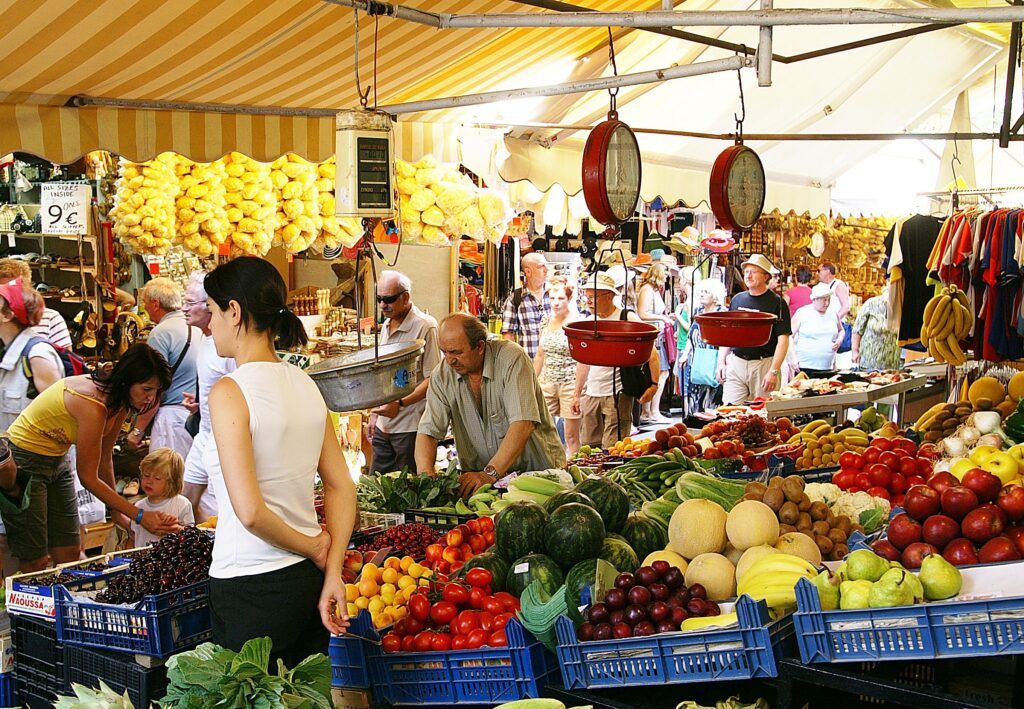
Athens’ laiki farmers’ markets transform ordinary neighborhood streets into temporary open-air markets filled with fruit, vegetables, fish, olives, herbs, flowers, and everyday household goods. They are among the best places to see how Athenians actually shop, cook, and follow the seasons beyond the city’s permanent central markets.
What Is a Laiki Agora?
The Greek term laiki agora means a people’s market.
Unlike Varvakios Central Market, which operates as a permanent market in the historic centre, a laiki appears in a neighborhood on a specific day of the week.
Early in the morning, stalls, tables, awnings, crates, and weighing equipment transform an ordinary residential street.
Several hours later, everything is packed away and the road gradually returns to normal.
This temporary character is essential to the experience.
The market belongs to the rhythm of the neighborhood rather than to a fixed tourist site.
Across Athens and Piraeus, there are nearly two hundred weekly laiki markets, meaning most residents have one relatively close to home.
Distance and Travel Time from Athens Airport to a Laiki Market
There is no single destination called the Athens Laiki Market.
Weekly markets take place in neighborhoods across the metropolitan area, including central districts, northern suburbs, southern neighborhoods, and Piraeus.
Travel time from Athens International Airport therefore depends entirely on the market you want to visit.
A central neighborhood such as Exarcheia, Koukaki, Pangrati, or Kolonaki generally requires around 35 to 55 minutes by road under normal conditions.
Markets in Glyfada, Kifisia, or other suburban districts follow completely different routes.
Booking a private tranfer with Book Athens Transfers is most useful for reaching your hotel or the appropriate neighborhood. The market streets themselves are normally closed or restricted to vehicles while stalls are operating.
Seasonal Produce at the Heart of the Market
Fresh fruit and vegetables form the core of most laiki markets.
The exact displays change dramatically throughout the year.
Summer brings tomatoes, peaches, melons, watermelons, cherries, peppers, aubergines, okra, and other warm-weather produce.
Autumn introduces grapes, figs, pomegranates, and fresh pistachios.
Winter brings citrus fruit, chestnuts, leafy greens, cabbages, and quince.
Spring adds artichokes, broad beans, peas, loquats, vine leaves, and wild greens.
This seasonal rhythm is one of the most useful things a visitor can learn from the market.
Greek cooking is closely connected with what is available at the time of year.
Buying Like a Local
Athenians often arrive at the laiki with reusable shopping trolleys or large bags.
They compare prices, inspect produce, talk with sellers, and move between stalls according to quality and familiarity.
Regular customers may know particular producers and return to the same stand week after week.
This creates a level of continuity that visitors may not immediately notice.
The market is not simply a collection of sellers.
It is a recurring social and commercial relationship between neighborhoods and producers.
Travelers do not need to imitate local habits perfectly, but observing them makes the market much more interesting.
Fruit and Vegetables from Across Greece
Many sellers are producers bringing goods from farms around Attica and other parts of Greece.
Others operate as professional market traders.
Together, they create an enormous range of produce.
Olives, tomatoes, herbs, greens, citrus fruit, stone fruit, potatoes, onions, cucumbers, beans, courgettes, and seasonal specialties can fill entire streets with color.
The quality and variety help explain why simple vegetable dishes play such an important role in Greek home cooking.
Ingredients do not need excessive preparation when they are naturally flavorful and in season.
Fresh Fish at the Laiki
Many laiki markets also include fishmongers.
Fish and seafood are displayed on ice while sellers call out prices and prepare purchases.
This provides a smaller neighborhood alternative to the fish halls of Varvakios Central Market.
For travelers interested in Greek seafood, the market offers a useful look at the types of fish people actually buy for home cooking.
The exact selection depends on season, catch, and location.
As with any working market, the area around fish stalls can be wet and crowded, so visitors should walk carefully.
Olives, Eggs, Honey and Local Products
Beyond fruit and vegetables, many laiki markets include other food products.
Olives appear in different varieties and preparations.
Eggs, honey, herbs, nuts, legumes, cheese, and small-producer goods may also be available depending on the specific market and licensing arrangements.
Organic markets can offer an even stronger focus on small producers and specialty products.
These stalls are particularly useful for travelers who want edible souvenirs or ingredients that connect directly with Greek regional food culture.
Flowers and Plants
Flowers and plants bring another layer of color to the laiki.
Seasonal flowers, herbs in pots, balcony plants, and small garden products appear beside food stalls.
This reflects a practical part of Athenian life.
Even in a dense city dominated by apartment buildings, balconies are often filled with plants.
The flower stalls show that the market is not only about cooking.
It serves everyday household and neighborhood needs.
Clothing and Household Goods
Some laiki markets include stalls selling inexpensive clothing, footwear, kitchen tools, cleaning products, fabrics, and other household items.
These stands may seem surprising to visitors expecting only farm produce.
But the laiki has always been practical.
Residents come because prices can be competitive and because several types of everyday purchases can be made in one walk.
The quality varies, and these goods are not necessarily the main reason for a tourist to visit.
However, they help explain why the market remains relevant to local life.
Pangrati, Koukaki and Other Central Markets
Travelers staying in central neighborhoods may encounter laiki markets in places such as Pangrati, Koukaki, Kolonaki, Kypseli, Petralona, and Ambelokipi.
Each market reflects its neighborhood.
A Koukaki market may be convenient for travelers staying near the Acropolis.
Pangrati offers a more residential atmosphere.
Kolonaki creates an interesting contrast between premium boutiques and ordinary food shopping.
Because locations and schedules can be adjusted, always verify the current day and street before planning a specific visit.
The best market is often simply the one closest to where you are staying.
Glyfada Laiki Market
Glyfada’s weekly market is particularly popular with residents of the southern suburbs.
Seasonal produce, olives, herbs, clothing, and household products create a very different experience from the boutiques and restaurants for which Glyfada is better known.
This contrast is valuable.
The Riviera district may have an upscale reputation, but the weekly market shows the same everyday shopping traditions found across Athens.
Visitors staying along the coast can experience a laiki without travelling into the historic centre.
Kifisia and Organic Markets
Kifisia also provides a different version of neighborhood market culture.
The northern suburb is associated with boutiques, cafés, restaurants, and elegant residential streets, yet local markets remain part of everyday life.
Organic markets in northern Athens have become known for produce from smaller producers, including vegetables, legumes, honey, olive oil, and other regional foods.
The combination of premium retail and traditional weekly shopping illustrates how broad the laiki tradition is.
It is not limited to one social class or one type of neighborhood.
Why Morning Is Usually Best
Laiki markets begin early.
Morning is generally the best time for visitors because the produce is fully displayed, sellers are active, and the market has its strongest neighborhood rhythm.
Earlier hours can also be more comfortable during hot weather.
Later in the day, some prices may fall as sellers try to clear remaining produce, but the selection becomes less complete.
By mid-afternoon, many markets are already being dismantled.
If photography, browsing, and variety matter more than bargain hunting, arrive earlier rather than later.
Respect the Market as a Working Space
A laiki is not a performance.
People are shopping for their weekly groceries.
Sellers are working quickly, residents are carrying heavy bags, and narrow spaces between stalls can become crowded.
Visitors should avoid standing in the middle of the flow for photographs or treating people as visual props.
Ask before photographing a seller closely.
Move aside when customers are trying to buy something.
A respectful approach makes the experience more comfortable for everyone and allows the market to remain what makes it interesting in the first place: an ordinary part of local life.
What to Buy as a Visitor
Travelers staying in an apartment can make full use of the market.
Seasonal vegetables, fruit, herbs, eggs, olives, and fish can become ingredients for meals during the trip.
Hotel guests can still buy products that are easy to eat or carry.
Fruit, nuts, olives, honey, dried herbs, and some packaged goods are practical options.
Always consider customs restrictions when carrying food internationally.
Fresh produce, meat, dairy, and plant products may be restricted when entering another country.
Laiki Markets and Greek Food Culture
A market visit changes how restaurant dishes look afterward.
Horiatiki salad becomes connected with actual seasonal tomatoes, cucumbers, peppers, olives, and herbs.
Ladera dishes make more sense after seeing rows of aubergines, courgettes, okra, beans, and greens.
Grilled fish connects with the seafood stalls.
Greek cuisine often appears simple on the plate because much of its character comes from the quality and timing of ingredients.
The laiki makes that relationship visible.
Combine a Laiki with Neighborhood Exploration
Because laiki markets take place across the city, they can become part of a larger neighborhood day.
Visit the Kallidromiou market and continue through Exarcheia or up toward Strefi Hill.
Shop in Koukaki and then walk toward the Acropolis or Filopappou.
Visit a Glyfada market and continue toward cafés, shops, and the Riviera.
This is more useful than travelling across Athens simply to see one market.
Let the laiki introduce the neighborhood around it.
Private Transfer from Athens Airport to Your Market Neighborhood
A private transfer with Book Athens Transfers provides direct transportation from Athens International Airport toward your hotel or the neighborhood where you plan to stay.
Your driver can meet you at arrivals, assist with luggage, and continue toward central, northern, or southern Athens.
Private transfer services are useful because weekly markets are spread across the metropolitan area and their streets are often inaccessible to vehicles while operating.
The transfer gets you to the right district; the market itself is best explored on foot.
Premium Transfer Across Athens Neighborhoods
A premium transfer provides additional comfort for travelers staying outside the historic centre or combining several districts in one day.
Executive vehicles are suitable for couples, business travelers, private parties, and visitors who prefer a more refined road experience.
A premium transfer can connect a hotel with neighborhoods such as Kifisia, Glyfada, Kolonaki, or another part of Athens before or after a market visit.
Because laiki streets themselves may be closed to traffic, drop-off should be arranged at a practical nearby point.
Athens Airport Minivan for Families and Groups
An Athens Airport Minivan is practical for families, cooking groups, larger parties, and travelers staying in apartments with substantial luggage.
Additional passenger and luggage space keeps the group together during the airport journey.
When arranging your athens transfer with Book Athens Transfers, provide passenger numbers, luggage requirements, and your exact accommodation address.
After arriving, the group can explore the nearest weekly market on foot and experience the neighborhood at a slower pace.
Discover Everyday Athens Through the Laiki with Book Athens Transfers
Athens’ laiki farmers’ markets reveal a side of the city that monuments and museums cannot show.
Seasonal produce, fish, olives, flowers, household goods, neighborhood conversations, regular customers, and temporary street stalls create one of the clearest expressions of everyday Athenian life.
Booking your athens transfer with Book Athens Transfers provides an organized journey from Athens International Airport toward the neighborhood that suits your stay. Choose private transfer services for direct transportation, a premium transfer for additional comfort, or an Athens Airport Minivan when travelling with family or a larger group.